The Life of a Charlotte New Build in 12 Stages
By the Tide & Timber Investments team, a veteran-owned residential developer in Charlotte, North Carolina, and an affiliate of Tide & Timber Ventures, LLC. Last updated 21 October 2026.
Quick answer: A Charlotte infill new build moves through 12 stages: find the lot, run due diligence, buy the land and arrange financing, design the house, get permits, demolish and prepare the site, build the foundation, frame and dry in, rough in the systems, insulate and finish, pass final inspections for a certificate of occupancy, then market and sell. Most of the risk sits in the first five stages, before anyone breaks ground, and delays often come from permits, inspections, weather and the sale.
Information current as of 21 October 2026, 9:59 PM ET. Rules, fees, maps and market figures change. Anything we could not confirm from an official source has been left out of this article. Check the linked official sources before relying on any detail.
We have covered the market, the people, the land, the rules and, in Charlotte Water Capacity and Connection Fees, the last of the big costs. Here is how it all comes together, from lot to sale.
From the street, a new house seems to appear in a few months. Behind it are many more months of decisions, approvals and inspections, each with its own risks.
This article walks through a typical Charlotte infill build, stage by stage. We deliberately don’t put durations on each stage: lot conditions, design, the permit queue, weather and the market all change them. Permit and inspection steps are described in general terms; check the current requirements with the City of Charlotte and Mecklenburg County Code Enforcement.
The 12 stages at a glance
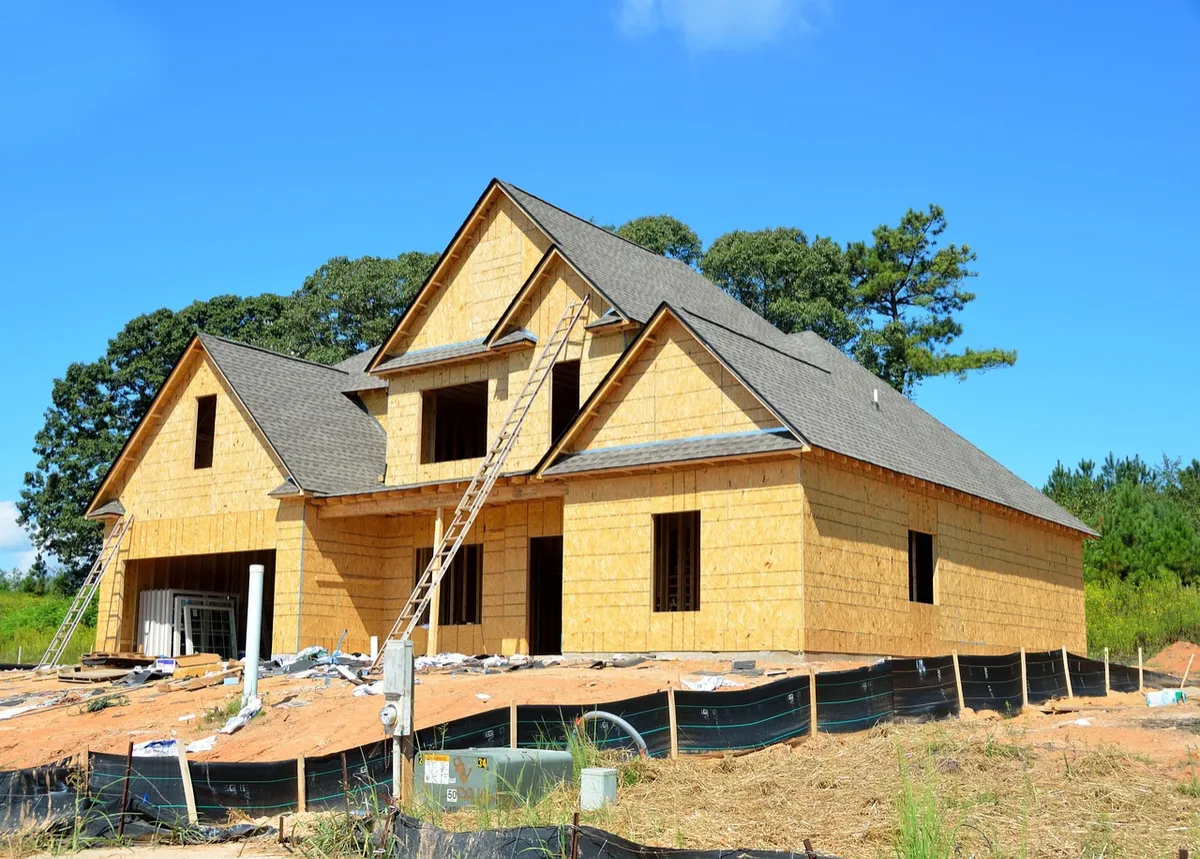
| # | Stage | Main question | Who is involved |
|---|---|---|---|
| 1 | Find the lot | Is this lot worth a closer look? | The builder |
| 2 | Due diligence | Can we build what we want here, at a sensible cost? | Attorney, surveyor, city and county staff |
| 3 | Buy the land and finance | Do we close, and how is it funded? | Attorney, lender |
| 4 | Design | What house fits the lot and the buyer? | Designer or architect |
| 5 | Permits | Do the plans meet the rules? | City and county permit offices |
| 6 | Demolition and site prep | Is the lot ready to build on? | Contractors, inspectors, utilities |
| 7 | Foundation | Is the base right? | Inspectors |
| 8 | Framing and dry-in | Is the structure sound and weather-tight? | Inspectors |
| 9 | Rough-ins | Are plumbing, electrical and HVAC in and safe? | Inspectors |
| 10 | Insulation, drywall and finishes | Does it meet code and buyer expectations? | Inspectors, the builder |
| 11 | Final inspections and CO | Is it legal to live in? | City and county |
| 12 | Market and sell | Who buys it, and for how much? | The market |
Stage 1: Find the lot
Infill lots come from teardowns, vacant parcels, estates, out-of-state owners and lots that can be split. Before any offer, a builder runs a free first pass on Mecklenburg County’s Polaris map. Most lots fail here, and that’s fine. (See Finding Infill Lots in Charlotte (coming soon).)
Stage 2: Due diligence
Once a lot is under contract, the buyer checks it before committing, within whatever time the contract allows. This is where the real checks happen: title, survey, zoning under the Unified Development Ordinance (UDO), floodplain and stream buffers, utilities, easements, trees, and the numbers.
This stage is cheap compared with what follows. Walking away now costs fees and time. Walking away later can cost the project. (See The Eight Checks Before Buying a Charlotte Lot.)
Stage 3: Buy the land and arrange financing
If the lot passes, the purchase closes, with the buyer’s own real estate attorney reviewing the paperwork. Funding often comes from a mix of the builder’s own money, private lenders or investors, and a construction loan from a bank.
Construction loans are usually paid out in draws. The lender releases money in stages as work is completed and checked, not all at once. Interest runs on what’s been drawn. (See Construction Loans: How Banks Fund a Build (coming soon).)
Stage 4: Design
The house has to fit three things: the lot (width, setbacks, slope, trees, height limits), the rules (the UDO or the town’s ordinance, and the state building code), and the buyer in that neighbourhood. A house that’s too big for the street can be as hard to sell as one that’s too small.
Plans may come from an architect, a residential designer or adapted stock plans. (See Design: Choosing a Plan That Fits the Lot and the Buyer (coming soon).)
Stage 5: Permits
Inside Charlotte, the city applies the UDO: zoning, setbacks, trees and, where triggered, stormwater and floodplain rules. Building plans and construction permits go through the building code review process. Utility applications run alongside: water and sewer with Charlotte Water (or a septic system where there’s no sewer), and power with your electric provider.
Which office handles which permit depends on where the lot is. Start with Mecklenburg County Code Enforcement and the City of Charlotte (or the town) to map out the steps for your lot.
Permitting is a common source of delay. Incomplete plans mean comments, revisions and resubmission. (See Permitting With Mecklenburg County Code Enforcement (coming soon).)
Stage 6: Demolition and site preparation
On a teardown, the old house comes down first. That means a demolition permit, utility disconnections, and checking for hazardous materials such as asbestos before work starts. State and county rules apply, so confirm the current steps with the permit office and Mecklenburg County Air Quality. (See Asbestos and Lead in Teardowns (coming soon).)
Then the site is cleared, tree protection and erosion control go in, and the lot is graded. Hidden surprises show up here: rock, old foundations, buried oil tanks, poor soil.
Stage 7: Foundation
The house is laid out on the ground, usually by a surveyor, so it lands inside the setbacks. Then come footings and a slab, crawl space or basement, depending on the design and the slope.
Inspectors check foundation work at set points before it’s covered or concrete is poured. Many builders also order a survey at this point to confirm the house is where the plan says. (See Site Work and Foundations (coming soon).)
Stage 8: Framing and dry-in
Walls, floors and roof go up. The house is dried in when the roof covering, windows, exterior doors and house wrap keep the weather out. The framing is inspected before it’s hidden. (See Framing and Dry-In (coming soon).)
Stage 9: Rough-ins
Plumbers, electricians and HVAC installers run pipes, wires and ductwork through the open walls. This is called the rough-in. Low-voltage wiring (internet, security, audio) often goes in now too.
The work is inspected while the walls are still open. A failed inspection means fixes and a re-inspection, and the next trades wait. (See Mechanical, Electrical and Plumbing Rough-In (coming soon).)
Stage 10: Insulation, drywall and finishes
Insulation goes in and is checked against the state energy code. Then drywall, interior trim, cabinets, countertops, flooring, tile, paint, fixtures and appliances. Outside: siding and trim, driveway, walkways, grading and landscaping, including any frontage trees the UDO requires.
Finish choices sell houses. They’re also where budgets drift. (See Insulation, Drywall and Energy Code (coming soon) and Finishes Charlotte Buyers Expect (coming soon).)
Stage 11: Final inspections and certificate of occupancy
Final inspections cover the building and each trade. City items, such as required trees and any floodplain certifications, also have to be signed off. Once every approval is in place, a certificate of occupancy (CO) is issued. Without a CO, the house can’t legally be occupied, and a buyer’s lender is unlikely to close.
Punch lists, missing paperwork and an open approval can each delay the CO. (See Inspections: What Gets Checked and When (coming soon).)
Stage 12: Market and sell
Some builders list during construction. Others wait until the house is finished. A buyer makes an offer, runs their own checks and inspections, the appraisal comes in, and the sale closes. The construction loan is paid off from the sale.
Only then is the project’s result known. Until the sale closes, every number is a projection. A slower market, higher interest rates or an appraisal below the contract price can all change the outcome.
Where do projects lose time?
| Stage | Common causes of delay |
|---|---|
| Due diligence | Slow survey, title or utility answers |
| Permits | Incomplete plans, review comments, resubmissions |
| Demolition and site prep | Hazardous materials, rock, buried tanks, utility disconnections |
| Construction | Weather, labour and material availability, failed inspections |
| CO | Open approvals, punch-list items |
| Sale | Market conditions, appraisal gaps, buyer financing |
Every extra month costs interest, taxes, insurance and utilities. That’s why a plan needs a time contingency as well as a budget one, and why investors should ask how a builder’s actual timelines compared with their plans.
Back to the beginning: Start Here: A Plain-English Guide to Real Estate Investing in Charlotte is the map for everything in the Learning Hub, and the webinars go deeper on each topic.
Frequently asked questions
How long does it take to build a new house in Charlotte?
It varies widely. Lot purchase, design and permits can take months before construction starts, and the build itself depends on the house, weather, labour and inspections. Then the house has to sell. Ask any builder for their actual timelines on recent projects, not just their plans.
Who issues building permits in Charlotte?
It depends on the permit and where the lot is. Start with Mecklenburg County Code Enforcement for building permits and the City of Charlotte (or the relevant town) for zoning and site rules, and confirm the current process with them.
What inspections does a new house need?
Inspectors check the work at several stages during construction, generally before each stage is covered up, plus final inspections at the end. The required list and order are set by state rules and applied locally, so confirm them with Mecklenburg County Code Enforcement for your project.
What is a certificate of occupancy?
It’s the official confirmation that a new home has passed its inspections and approvals and can legally be occupied. Buyers’ lenders normally need it before closing. Ask the permit office what’s required for your project.
What is the riskiest stage of a new build?
Many builders would say the stages before construction: buying the right lot and getting it approved. Problems with land, zoning or utilities are expensive to fix later. During and after construction, time and the sale price are the biggest risks.
Sources
Checked 21 October 2026 at 9:59 PM ET.
- City of Charlotte, Unified Development Ordinance: charlotteudo.org
- City of Charlotte UDO, Article 20 (tree preservation, frontage trees): charlotteudo.org
- City of Charlotte UDO, Article 27 (floodplain regulations): charlotteudo.org
- Mecklenburg County Code Enforcement, permitting: code.mecknc.gov
- Mecklenburg County Air Quality, asbestos program: airquality.mecknc.gov
- Charlotte Water, rates and fees: charlottenc.gov
Want to go deeper?
This article is part of our How a Charlotte Build Works series. The companion webinar, Deal Breakdown: 6900 Barrington Drive, follows a completed Charlotte project through these stages.
Related reading:
- Anatomy of a Charlotte New-Construction Project, Start to Sale (coming soon)
- The Eight Checks Before Buying a Charlotte Lot
- Start Here: A Plain-English Guide to Real Estate Investing in Charlotte
This article is for general education only. It isn’t legal, tax or investment advice, and it isn’t an offer to sell or a solicitation of an offer to buy any security. Any offering by Tide & Timber Investments is made only to persons with whom we have a pre-existing relationship, through formal offering documents. Real estate investing involves risk, including loss of principal. Rules, fees and market conditions change; confirm details with the relevant county, city or town and with your own financial, tax and legal advisers before you act.

