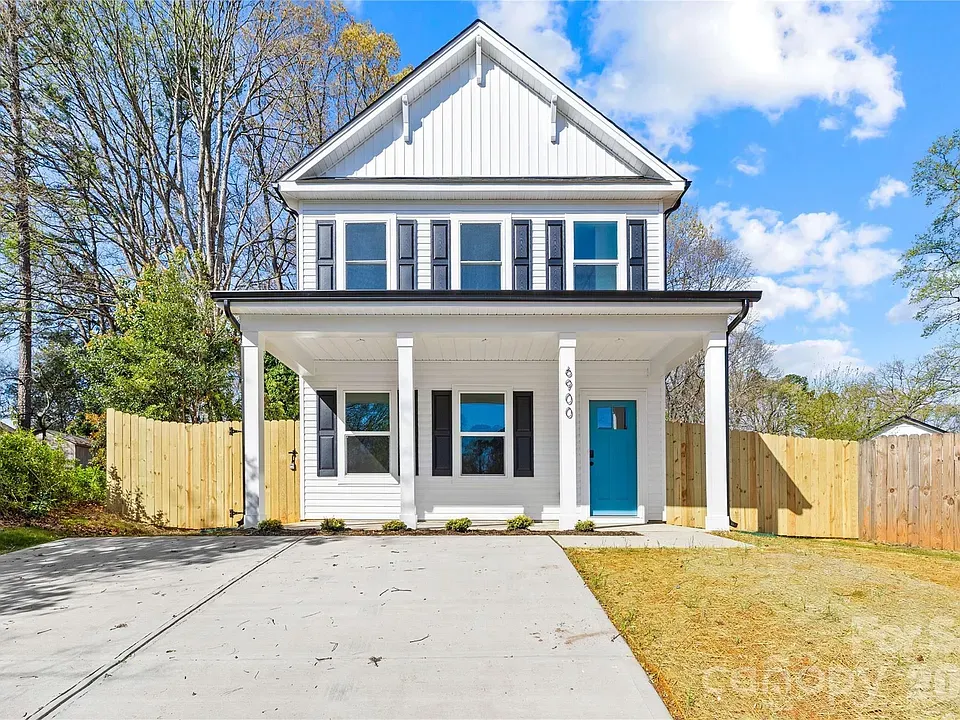
Start Here: A Plain-English Guide to Real Estate Investing in Charlotte
By the Tide & Timber Investments team, a veteran-owned residential developer in Charlotte, North Carolina, and an affiliate of Tide & Timber Ventures, LLC. Last updated 21 October 2026.
Quick answer: To start investing in real estate in Charlotte, first work out what you are investing for (your Freedom Number), build a cash safety net, and only invest money you will not need for several years and could afford to lose. Then choose one of seven lanes (rentals, house hacking, flips, new construction, private lending, syndications or REITs), learn which county or town rules apply to the property, and check every sponsor and lot using free Mecklenburg County records such as Polaris and the Register of Deeds.
If you’ve ever driven past a new house going up on a narrow lot in Plaza Midwood, or watched a 1950s ranch in East Charlotte get gutted and relisted, you’ve probably wondered how that works and whether you could be part of it.
You can. But most people start in the wrong place. They start with what to buy. This guide starts with how to think. By the end, you’ll know the main ways people invest in real estate, what makes the Charlotte region different from anywhere else, and the eight steps to take before a single dollar leaves your account.
It’s long, so here’s the map:
What “investing in real estate” actually means
The seven main ways to invest
What’s different about Charlotte
Eight steps before you invest
The mistakes we see most often
Twenty terms you’ll hear in your first month
Where to go next
1. What “investing in real estate” actually means
At its simplest, real estate investing means putting money into property, or into loans secured by property, in the hope of getting more back later.
That “more” can come from four places:
Source | What it is | When you see it |
|---|---|---|
Cash flow | Rent or interest left after expenses | Regularly, monthly or quarterly |
Appreciation | The property becomes worth more | When it’s sold or refinanced |
Loan paydown | Rent pays down the mortgage over time | When it’s sold or refinanced |
Tax benefits | Depreciation and other deductions | At tax time |
A new-construction project, building a house on a lot and selling it, works differently. It earns nothing while it’s being built. If it makes money, the profit arrives once, when the house sells.
Every one of these can also lose money. Rents fall, buyers disappear, builds run late, costs rise. The skill isn’t finding something that can’t go wrong; nothing qualifies. It’s understanding what could go wrong, how likely it is, and whether you’re being paid enough to accept it.
The one-line version: real estate makes money in four different ways, they behave very differently, and each one can also lose money.
2. The seven main ways to invest
Think of these as lanes. Some need your time; some need only your money. Some you control; some you hand to someone else.
1. Buy a rental property yourself
You buy a house, duplex or small apartment building and rent it out.
You control: everything. Tenants, repairs, rent, when to sell.
You need: a down payment, good credit, cash reserves, and time (or a property manager).
Watch for: vacancies, big repairs (roofs, HVAC), and the reality that being a landlord is a part-time job.
2. House hacking
You buy a duplex, triplex or a house with an accessory dwelling unit (ADU), live in one unit and rent the others. In Charlotte this became more practical after the city’s Unified Development Ordinance (UDO) took effect in 2023, because many single-family lots can now hold more than one home. (More in Charlotte’s UDO in Plain English (coming soon).)
Good for: first-time investors who are buying a home anyway.
3. Fix and flip
You buy a dated property, renovate it, and sell it.
You need: cash or short-term financing, a reliable contractor, and a sharp eye for after-repair value.
Watch for: renovation surprises and holding costs. Every extra month costs interest, taxes and insurance.
4. New construction (infill development)
You buy a lot, often a teardown or a vacant parcel inside an established neighbourhood, build a new home and sell it. This is what we do.
You need: land-use knowledge, a builder, construction financing, and patience. Permits, inspections and weather all add time.
Watch for: the deal-killers hidden in the land itself: easements, floodplains, utilities, zoning. (See The Charlotte Deal-Killer Field Guide (coming soon).)
5. Private lending
You lend money to an investor or builder, usually secured by the property, and receive interest.
You give up: most of the upside. Lenders get their interest, not the profit.
You get: a defined position, usually ahead of the owners if things go wrong. (See Debt vs. Equity: Two Seats at the Same Table (coming soon).)
6. Passive investing in a private deal (syndication)
You put money into a project run by someone else (a “sponsor”), alongside other investors. You own a share; they do the work.
You give up: control, and usually access to your money until the project ends.
You need: to judge the sponsor as much as the property. (See How to Vet a Real Estate Sponsor (coming soon).)
Note: many private deals are only open to accredited investors or people the sponsor already knows. More in step 7 below.
7. Public real estate (REITs and funds)
You buy shares in a real estate investment trust (REIT) or real estate fund through a normal brokerage account.
You get: liquidity (you can usually sell any trading day) and broad diversification.
You give up: any control, and prices move with the stock market.
Lane | Your time | Your control | Can you get your money out quickly? |
|---|---|---|---|
Own a rental | High | High | No |
House hack | High | High | No |
Fix and flip | High | High | No |
New construction | Very high | High | No |
Private lending | Low | Low | No, until the loan is repaid |
Syndication | Low | Low | No, until the project ends |
REITs and funds | Very low | None | Usually yes |
There’s no “best” lane. There’s the one that fits your money, your time and your temperament.
3. What’s different about Charlotte
Real estate is local. A strategy that works in Phoenix or Pittsburgh may not work here, and the other way round. Here’s what shapes the Charlotte region.
The region is many rulebooks, not one
“Charlotte” in conversation usually means a region that spans Mecklenburg County and its neighbours (Union, Cabarrus, Gaston and Iredell in North Carolina, and York and Lancaster across the line in South Carolina). Each county, and many towns inside them (Matthews, Mint Hill, Huntersville, Fort Mill, Rock Hill and others), has its own zoning, permitting and fees. Two lots ten minutes apart can follow completely different rules.
The UDO changed what can be built inside the city
On 1 June 2023, the City of Charlotte’s Unified Development Ordinance replaced its old zoning code. Most single-family neighbourhoods now sit in Neighborhood 1 districts, where many lots can hold a duplex or triplex, not only a single house, subject to lot size and other rules. That changed the value of some land overnight, and it’s one reason infill building has grown. Private HOA covenants can still forbid it, and the city has reviewed these rules since, so always check the current ordinance.
Most of what you need to check is public and free
Mecklenburg County publishes a remarkable amount of property information online:
Polaris, the county’s property map, shows ownership, lot lines, zoning, floodplain and more. (Walkthrough: How to Check a Charlotte Lot on Polaris for Free (coming soon).)
The Register of Deeds lets you search deeds and recorded documents.
The tax office shows assessed values and tax bills.
Many investors never use these. You should. They’re how you check what you’re told.
Property values are reassessed every four years
Mecklenburg County now revalues property every four years. The last revaluation was in 2023 and the next is in 2027, with new value notices expected early that year. When values jump, tax bills can rise even if the tax rate falls. If you’re running numbers on a rental, use the current tax bill, not last year’s.
Growth is real, and it isn’t a guarantee
Charlotte has been one of the faster-growing large metro areas in the US for years, driven by jobs in banking, energy, health care and logistics, and by people moving from more expensive regions. That has supported demand for housing. But growth can slow, interest rates change what buyers can afford, and a good market doesn’t save a bad deal. We take the case for and against Charlotte seriously in Why Charlotte: The Growth Story and the Case Against It (coming soon).
The Charlotte version in one line: know which rulebook applies, check the free county records, and don’t let a growing market hide a weak deal.
4. Eight steps before you invest
These are in order. Skipping ahead is how most expensive mistakes happen.
Step 1: Know your Freedom Number
Before choosing an investment, know what you’re investing for. Your Freedom Number is how much you’d need invested for its income to cover your life:
Freedom Number = yearly spending ÷ a cautious income rate
A household spending $72,000 a year that assumes a 4% income rate would need $1.8 million. At 6%, it would need $1.2 million. The rate you assume matters as much as what you spend. (These are illustrations of the math, not projections of what any investment will earn.) Full walkthrough: The Charlotte Investor’s Guide to Your Freedom Number (coming soon).
Step 2: Build your safety net first
Keep three to six months of spending in cash you can reach in days, before you invest. Real estate is slow to sell. Without a cushion, one bad month (a job loss, a medical bill) can force you to sell at the worst time.
Step 3: Match the investment to when you need the money
Money you’ll need in the next few years (a house deposit, tuition) doesn’t belong in anything you can’t easily get out of. Most real estate investments, especially private ones, lock your money up until the property sells or the project finishes.
Step 4: Only invest what you could lose
Not because you expect to lose it, but because you could. If losing it would change how you live, it’s too much.
Step 5: Learn the vocabulary
You can’t judge what you can’t read. Start with the twenty terms below, then the pro forma glossary (coming soon).
Step 6: Pick one lane
Use the table in section 2. Choose based on your time, money and temperament, not on what someone at a meetup is excited about.
Step 7: Know which rules apply to you
If you’re looking at private deals, find out:
Whether you’re an accredited investor. The SEC sets income, net worth and professional-licence tests. Check the current definition on sec.gov rather than a summary. Being accredited doesn’t make a deal safer. It means the law assumes you can judge and absorb the risk yourself, so you get fewer protections.
How the deal is offered. Many private real estate deals are offered under SEC Regulation D. Some can only be offered to people the sponsor already has a relationship with. That’s why a responsible sponsor will get to know you before talking about any specific project. (Explained in Rule 506(b) vs. 506(c) (coming soon).)
Step 8: Check the people before the property
In passive investing especially, the sponsor is the investment. Ask what they’ve built, check it in public records, call references, and ask about the deals that went wrong. Our webinar 7 Questions to Ask Any Sponsor walks through exactly what to ask, including of us.
5. The mistakes we see most often
Starting with the deal instead of the plan. An exciting opportunity is easy to find. Knowing whether it fits your number, timeline and risk tolerance is the hard part.
Trusting the headline number. “18% return” means nothing until you know: return on what, over how long, from which of the four sources, and with what assumptions. A projection is a set of assumptions, not a promise.
Ignoring the land. In infill development, the most expensive problems are often invisible from the street: a transmission line easement, a creek buffer, no sewer at the road. Twenty minutes on Polaris catches many of them.
Underestimating time. Permits, inspections, weather, supply delays. Every month a project runs long costs money. Ask how a sponsor’s actual timelines compared with their plans.
Confusing gross and net. Gross profit is sale price minus the main project costs. It isn’t what lands in an investor’s pocket after financing, fees and taxes. Always ask which number you’re looking at.
Not reading the documents. The marketing summary isn’t the deal. The operating agreement and subscription documents are. Read them, and have your own attorney read them if the amount matters to you.
6. Twenty terms you’ll hear in your first month
Term | Plain English |
|---|---|
Accredited investor | Someone who meets SEC income, net worth or licence tests and can invest in certain private deals |
ARV | After-repair value: what a property should sell for once renovated or built |
Appreciation | An increase in a property’s value over time |
Capital stack | The layers of money in a project (loans and equity) and who gets paid first |
Cap rate | Net operating income ÷ property value; a quick way to compare rental properties |
Cash flow | Income left after all expenses and loan payments |
Comps | Comparable recent sales used to estimate value |
Contingency | Extra budget set aside for surprises |
Due diligence | The checking you do before committing: title, survey, zoning, inspections, numbers |
Easement | Someone else’s legal right to use part of a property (e.g. for power lines or sewer) |
Equity | Ownership. Equity investors share in profit and loss |
Gross profit | Sale price minus the main project costs, before financing, fees and taxes |
Hard costs | Physical construction costs: materials and labour |
Infill | Building on vacant or underused lots inside established neighbourhoods |
Liquidity | How quickly you can turn an investment back into cash |
Pro forma | A projection of a deal’s costs, timeline and outcome. A set of assumptions |
Soft costs | Non-construction costs: design, permits, fees, interest, insurance |
Sponsor | The person or company that finds, runs and manages a deal for investors |
Syndication | A deal where several investors pool money into a project run by a sponsor |
UDO | Charlotte’s Unified Development Ordinance, the city’s land-use rulebook since 2023 |
7. Where to go next
The Learning Hub is organised around nine topics, each with a free webinar and a series of articles. If you’re brand new, take them in this order:
Your Freedom Number: what you’re investing for. Webinar 01: Find Your Freedom Number
Vetting sponsors: who to trust and how to check. Webinar 02: 7 Questions to Ask Any Sponsor
Reading a pro forma: how to read the numbers. Webinar 03: Reading a Pro Forma Like an Operator
Due diligence: how good deals are separated from bad. Webinar 04: A Deal That Dies in Diligence Is Cheap
Deal-killers: what hides in the land. Webinar 05: The Powerline That Rewrote the Pro Forma
Debt vs. equity: which seat you sit in. Webinar 06: Debt vs. Equity
How a Charlotte build works: start to sale. Webinar 07: Deal Breakdown: 6900 Barrington Drive
The Charlotte market: the case for and against. Webinar 08: Why Charlotte: The Growth Math
Syndications, legal and tax: the paperwork before anyone shows you a deal. Webinar 09: How a Syndication Actually Works
You don’t need to learn everything at once. You need to learn things in the right order.
Keep reading: The first question most people ask is why Charlotte at all, so that is where we start. Why Charlotte: The Growth Math
Frequently asked questions
How much money do I need to start investing in real estate in Charlotte?
It depends on the lane. Buying a rental or house hacking usually needs a down payment, closing costs and cash reserves. Public REITs can be bought for the price of one share. Private deals often have minimums set by the sponsor. Whatever the lane, build a three-to-six-month emergency fund first, and only invest money you will not need for several years.
Is Charlotte a good place to invest in real estate?
Charlotte has grown quickly for years, supported by jobs in banking, energy, health care and logistics, and by people moving from more expensive regions. Growth supports housing demand but does not guarantee results. Interest rates, local rules and the quality of each individual deal matter more than the market headline.
Can I build a duplex or triplex on a single-family lot in Charlotte?
Often, yes. Since the Unified Development Ordinance took effect on 1 June 2023, many lots in Neighborhood 1 districts can hold a duplex or triplex, subject to lot size, setbacks and other rules. HOA covenants can still forbid it, and towns outside the city limits follow their own ordinances. Always confirm with the City of Charlotte before buying.
How do I look up a property in Mecklenburg County?
Use Polaris, Mecklenburg County’s free online property map, to see ownership, lot lines, zoning and floodplain. Use the Register of Deeds to read recorded deeds and easements, and the county tax office to see assessed values and tax bills.
Do I need to be an accredited investor to invest in real estate?
Not to buy property yourself or to buy public REITs. Many private real estate deals, however, are offered under SEC Regulation D and are limited to accredited investors or to people the sponsor already has a relationship with. Check the SEC’s current definition of an accredited investor on sec.gov.
What is the difference between gross profit and net profit on a real estate project?
Gross profit is the sale price minus the main project costs, such as land and construction. Net profit is what remains after financing, fees, taxes and other costs. Investors are paid from net, so always ask which number you are being shown.
Sources
Checked 21 October 2026.
City of Charlotte, Unified Development Ordinance (effective 1 June 2023): charlotteudo.org
Mecklenburg County Assessor, property revaluation (next revaluation 2027): tax.mecknc.gov
Mecklenburg County Polaris property map: polaris3g.mecklenburgcountync.gov
US Securities and Exchange Commission, accredited investor definition: sec.gov
This article is for general education only. It isn’t legal, tax or investment advice, and it isn’t an offer to sell or a solicitation of an offer to buy any security. Any offering by Tide & Timber Investments is made only to persons with whom we have a pre-existing relationship, through formal offering documents. Real estate investing involves risk, including loss of principal. Rules, fees and market conditions change; confirm details with the relevant county, city or town and with your own financial, tax and legal advisers before you act.

